
Search Tuolumne County Divorce Decree
Tuolumne County divorce decree records are maintained at the Superior Court in Sonora. The courthouse address is 12855 Justice Center Drive, Sonora, CA 95370. Call (209) 533-5555 for court information. All family law dissolution cases for Tuolumne County are filed and stored here. The clerk's office processes requests for divorce records. You can obtain certified copies for $15 or plain copies for 50 cents per page. Submit requests in person during business hours or send a mail request to the court. County seat is Sonora. The county covers a mountainous area in the Sierra Nevada foothills with a smaller population than urban counties.
Tuolumne County Quick Facts
Courthouse Records Office
Tuolumne County Superior Court is located at 12855 Justice Center Drive in Sonora. This courthouse handles all case types for the county including family law matters. The clerk's office maintains divorce case files.
Visit the clerk's office during business hours to request records. Bring photo identification. Provide the names of both parties or the case number. Staff will locate your case file.
Court hours are Monday through Friday, excluding court holidays. Call (209) 533-5555 before visiting to confirm hours and any special procedures. The court staff can answer basic questions about the records request process over the phone.
If your divorce case is several years old, the file may be in off-site storage. Retrieving archived files takes additional time. Ask the clerk how long it will take to access your specific file. They can tell you if it is on-site or needs to be pulled from storage.
Getting Divorce Record Copies
You can request divorce records in person or by mail. For in-person requests, go to the courthouse in Sonora. The clerk's office is on the main floor. Tell staff you need copies from a divorce case.
Provide details about the case. Full names of both spouses are needed. The case number helps if you have it. Without a case number, staff can search by name. If the name search takes over 10 minutes, a $15 search fee may apply under state law.
Decide between certified and plain copies before you order. Certified copies have the official court seal. These are needed for legal purposes like remarriage, name changes, or property matters. Plain copies work for personal reference but lack the seal.
For mail requests, write to Tuolumne County Superior Court at 12855 Justice Center Drive, Sonora, CA 95370. Include in your letter:
- Full names of both parties to the divorce
- Date of divorce filing or finalization
- Case number if known
- Which documents you need
- Whether you need certified or plain copies
- Your current mailing address and phone
Send payment with your written request. Make checks payable to Tuolumne County Superior Court. Include a self-addressed stamped envelope with enough postage for the court to return the documents. Processing time varies based on court workload and file location.
Note: Always confirm current fees before sending payment as costs can change.
Fee Schedule
Tuolumne County follows California state fee schedules. These fees are set by statute. Certified copies of dissolution judgments cost $15 according to California Government Code Section 70674. This applies to private party requests. Public agencies pay $10.
Plain copy fees are 50 cents per page. Each side of a page counts separately. A five-page decree costs $2.50 in plain copy fees. If you need it certified, add the $15 certification fee for a total of $17.50.
Certifying other documents from your case costs $40. This includes orders, agreements, and other court filings besides the dissolution judgment. The $40 covers the certification. You still pay 50 cents per page for the copies themselves.
Search fees apply when court staff must search for your case without a case number. If the search takes more than 10 minutes, the fee is $15 under state law. Providing the case number with your request helps avoid this fee. Call the courthouse at (209) 533-5555 to verify current fees before submitting payment.
Privacy and Access Rules
California restricts online access to family law records. Under California Rules of Court, Rule 2.503, courts may not provide remote access to divorce case documents. The public must visit the courthouse to view these files. This protects privacy in sensitive family matters.
Some case information may be available on the court website. You might find case numbers, party names, filing dates, or hearing schedules online. But the actual documents like petitions, financial disclosures, and the decree itself are not accessible remotely. You must go to the courthouse to see them.
Access rules differ based on your relationship to the case. If you were a party to the divorce, you can get copies of your case file. Third parties have more limited access. Some documents may be sealed or confidential. The clerk can explain what records you can access.
Certain information in divorce cases is always confidential. Financial details, child custody evaluations, and some declarations may not be available to the public. Even parties to the case may have restricted access to some documents depending on court orders in the case.
Certified copies prove the divorce decree is official. Keep certified copies safe as you may need them for many purposes over the years. Plain copies are fine for reference but do not carry legal weight.
State Vital Records Information
The California Department of Public Health kept limited divorce data from 1962 through June 1984. They do not have divorce decrees. They have certificates of record. A certificate shows a divorce filing occurred but does not include the judgment details.
These certificates list the names of both parties, the county where filed, the filing date, and the case number. They do not show the terms of the divorce or prove it was finalized. The certificate just verifies that a divorce petition was filed with the court.
Information about state certificates is available at cdph.ca.gov. Processing time for these certificates can exceed six months. The state office is much slower than requesting records directly from the court.
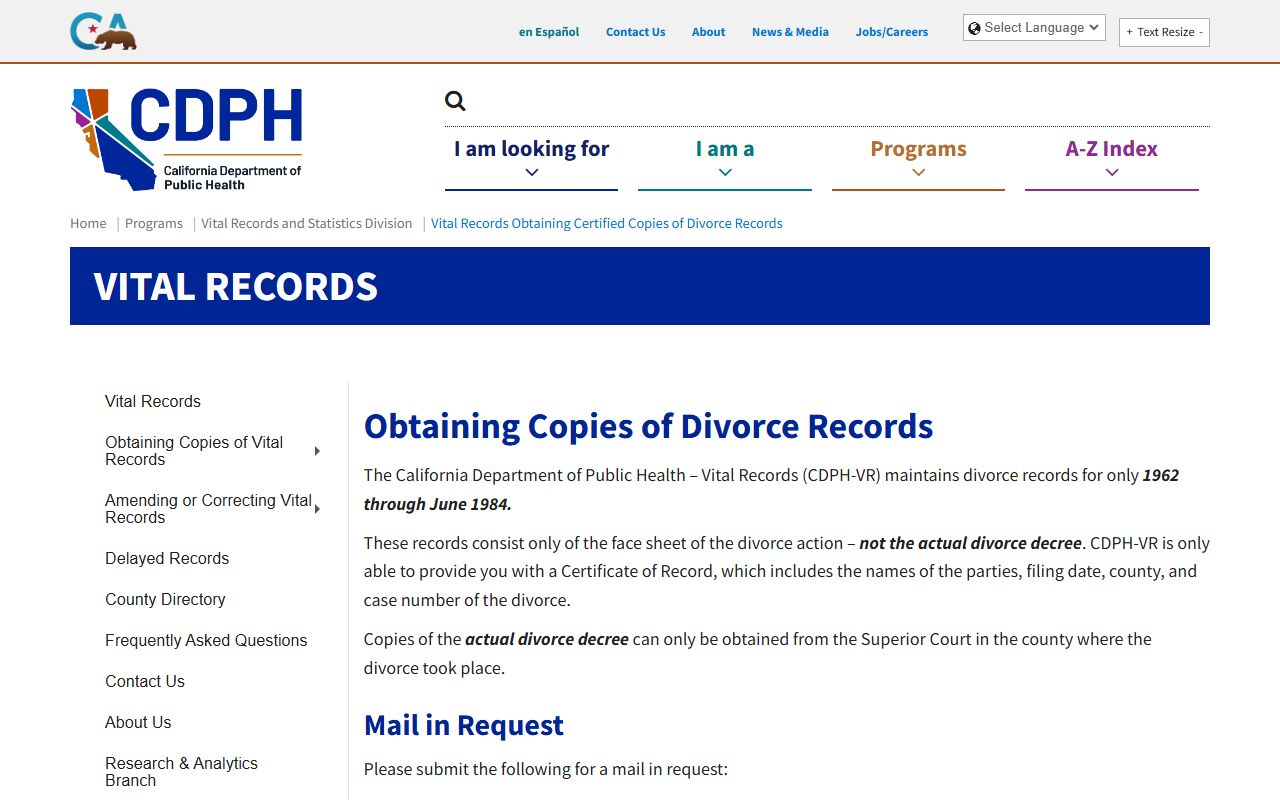
For actual divorce decrees, contact Tuolumne County Superior Court regardless of the year. The court is the official source for all divorce records. Even if your divorce falls within the state's date range, the court has the complete file while the state has only limited information. Most legal purposes require the decree from the court, not the state certificate.
Legal Help and Resources
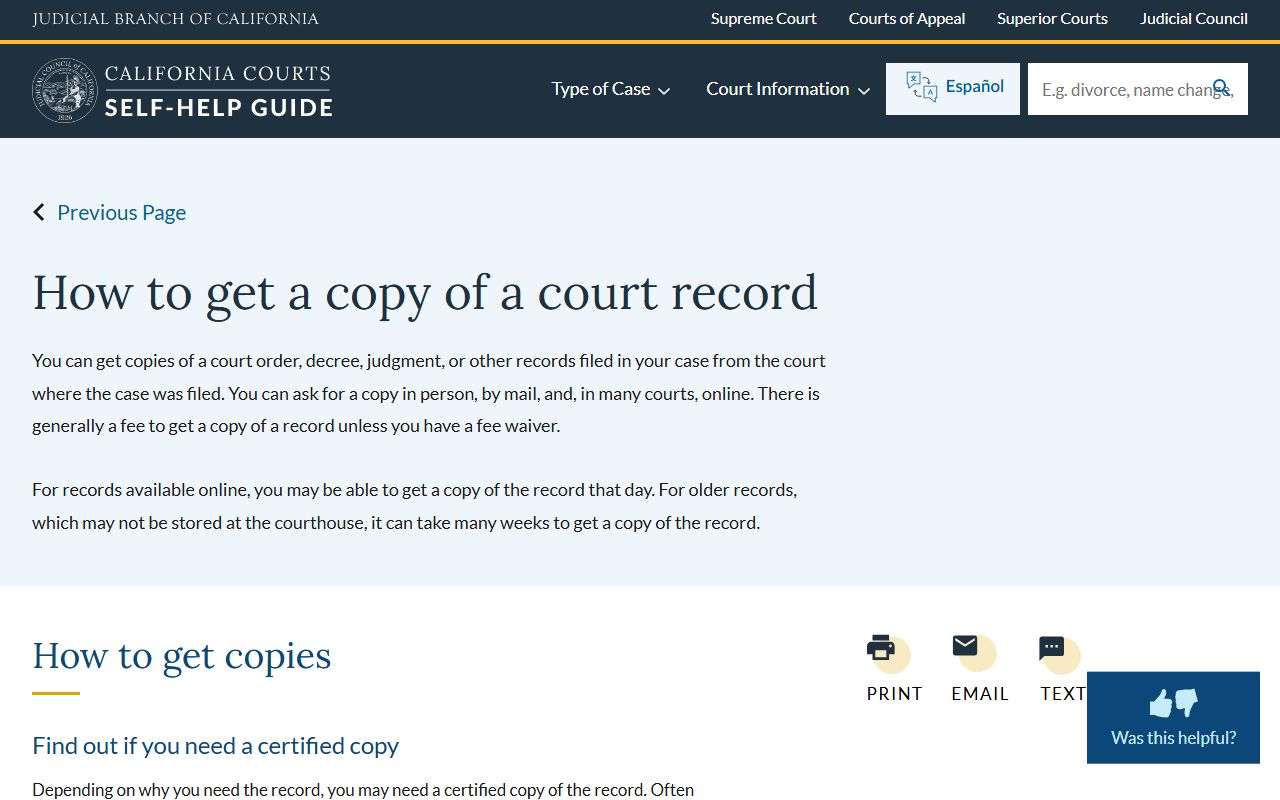
Legal assistance is available for family law matters in California. The state courts website at selfhelp.courts.ca.gov has information about getting court records. These guides explain the process and what information you need to provide.
Legal aid organizations provide free or low-cost legal services to qualifying individuals. These groups handle family law cases including divorce. Contact legal aid offices serving Tuolumne County or the surrounding region. They can tell you if you meet their income and case-type requirements.
The State Bar of California operates a lawyer referral service. They match people with attorneys practicing in their area. Call the referral service to find a family law attorney near you. Many lawyers offer an initial consultation at a reduced rate. This lets you discuss your situation and get advice before hiring someone.
Some courts operate self-help centers where staff assist people representing themselves. Check if Tuolumne County Superior Court has such a center. Self-help centers provide forms, procedural information, and guidance. Staff cannot give legal advice but can explain court processes and requirements. If Tuolumne County does not have a center, the clerk's office can direct you to resources.
Nearby Counties
Tuolumne County is bordered by several other California counties. Each county has its own Superior Court system handling divorce records.