
Search California Divorce Decree
You can find divorce decree records in California through two main sources. Superior Courts in each of the 58 counties hold the full case files with all legal documents filed during divorce proceedings. The California Department of Public Health maintains basic divorce records for cases filed between 1962 and June 1984 only, but these are just certificates of record and not actual divorce decrees. Most people need to contact the Superior Court in the county where their divorce took place to get a copy of the final decree. Each county operates its own court records system. Some courts offer online case searches while others require in-person visits or mail requests to access divorce records.
California Divorce Decree Quick Facts
Superior Court Divorce Records
California has one Superior Court in each of its 58 counties. These courts handle all divorce cases. When you file for divorce, all documents go to the county Superior Court. The court clerk maintains these records. Files include the petition, response, financial disclosures, settlement agreements, and the final judgment of dissolution. You can get copies from the court where your case was filed.
The clerk of the court stores all divorce decree records. Under California Family Code Section 2338, the clerk must maintain each judgment of dissolution. The clerk also gives notice when a judgment is entered. Court staff can help you find records if you have the case number or the names of both parties.
Most counties charge standard fees for copies. The law sets these fees. You pay $0.50 per page for plain copies. Certified copies of a divorce decree cost $15 under California Government Code Section 70674. Some counties charge $15 if a search takes more than 10 minutes. These fees are the same in most California counties.
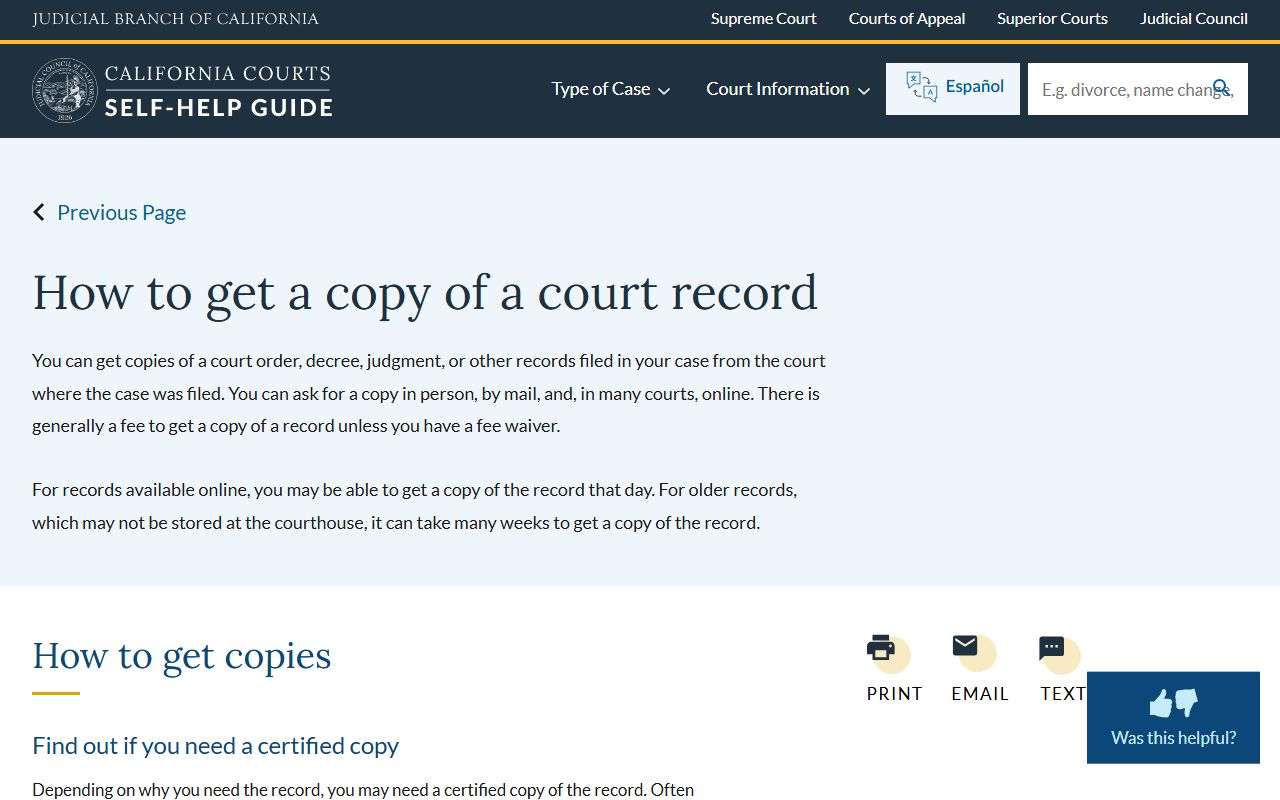
For court records in California, you can visit selfhelp.courts.ca.gov to learn how to get copies of your judgment or other documents. Each county court has its own procedures. Many accept requests by mail. Some let you order copies online. You can also go in person to any courthouse to ask for copies of public records.
Online Case Search Options
Many California counties provide online access to case information. You can search by name or case number. These portals show basic case details like the filing date, parties involved, and case status. Some show the register of actions which lists every document filed. However, you usually cannot view the actual divorce decree online.
California Rules of Court Rule 2.503 restricts remote access to family law records. Courts may not provide public remote access to dissolution records. You can see case indexes and calendars online. But to view the full case file or get copies of documents, you must visit the courthouse in person. This rule protects privacy in family law cases.
Each county runs its own online portal. Los Angeles County has a case search at lacourt.org. San Diego offers a case index at courtindex.sdcourt.ca.gov. Orange County provides family law case information through occourts.org. Search tools and fees vary by county. Some charge per search while others let you search for free.
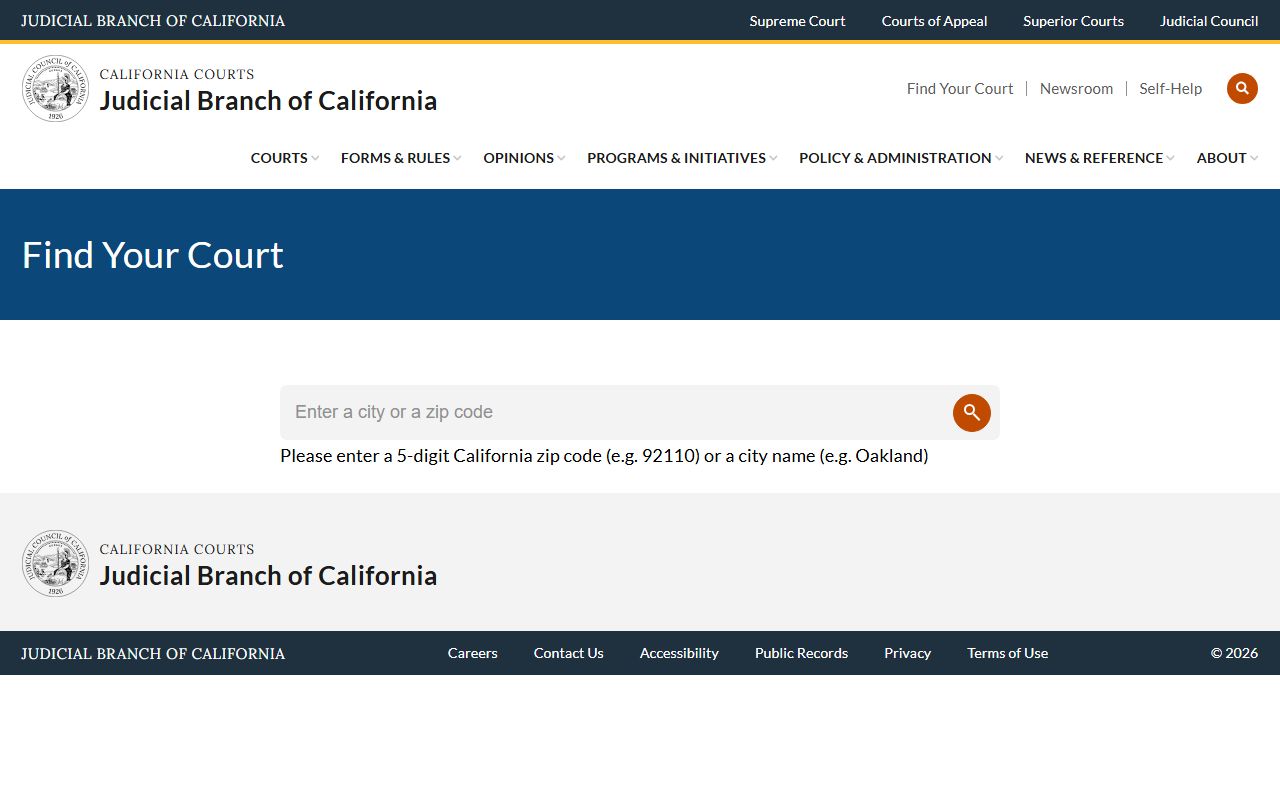
To find your county court online portal, visit courts.ca.gov/find-my-court and select your county. Each court lists its online services and contact information.
State Vital Records Office
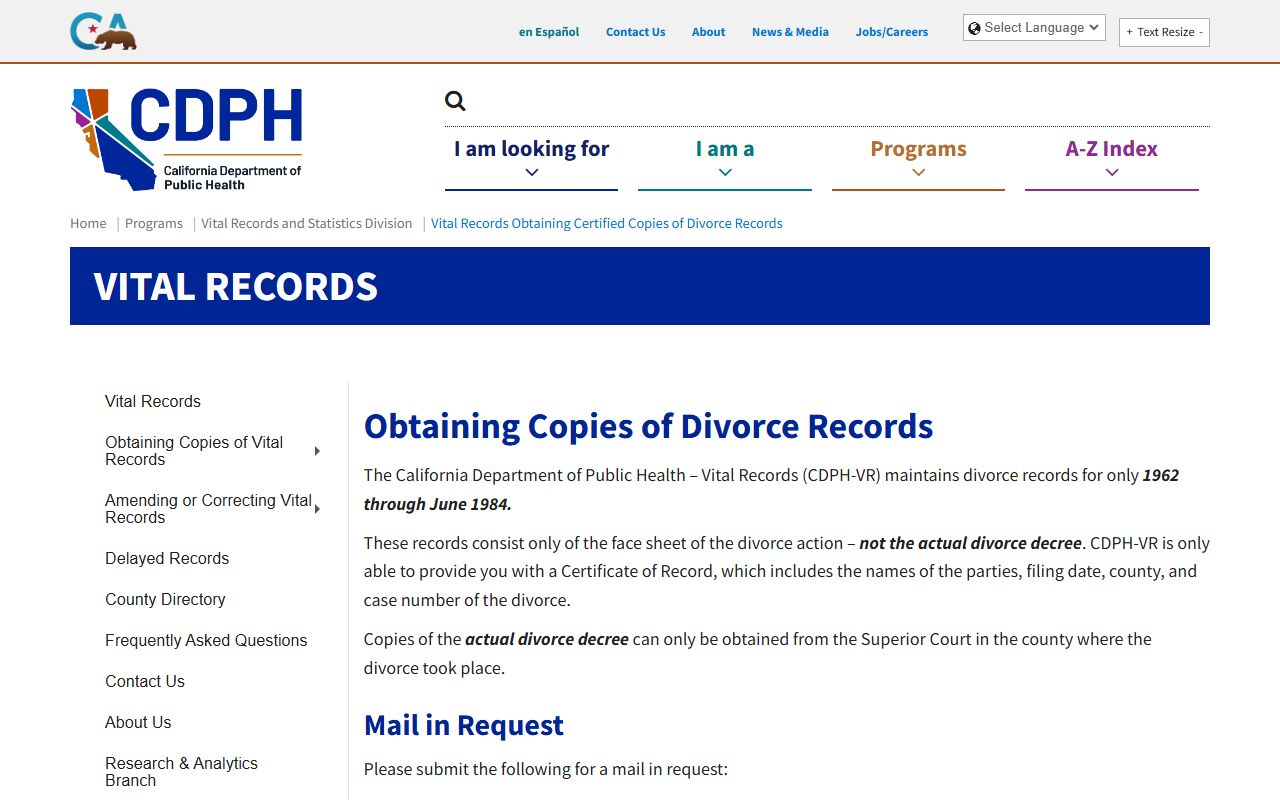
The California Department of Public Health keeps divorce records from a limited time period. They have records only from 1962 through June 1984. These are not full divorce decrees. They are certificates of record. A certificate shows just the basic facts.
What does a certificate of record include? It lists the names of both parties. It shows the filing date. It tells you the county and case number. That is all. It does not show the actual decree. It does not tell you if the divorce was finalized. You cannot use it as proof that your divorce is complete.
If your divorce falls outside the years 1962 to June 1984, CDPH cannot help you. You must contact the Superior Court. Even for divorces within that time range, most people need the actual decree from the court, not just a certificate. The certificate costs $16 per copy. Processing can take more than six months according to cdph.ca.gov.
To request a certificate of record, you fill out form VS 113-B. You can download it from the CDPH website. Send the completed form with a check or money order for $16 to California Department of Public Health, Vital Records MS 5103, P.O. Box 997410, Sacramento, CA 95899-7410. Do not send cash. You can also call (916) 445-2684 or email CHSIVitalRecords@cdph.ca.gov if you have questions about your request.
Divorce Laws in California
California law governs how divorce works in the state. The Family Code sets all the rules. These laws affect how long a divorce takes and what happens to property and children. You need to know some basics if you are filing or searching for records.
Under California Family Code Section 2339, every divorce has a six-month waiting period. The clock starts on the day the respondent is served with papers or appears in court, whichever comes first. No divorce is final until six months pass. The judgment must state the exact date when it becomes final under Family Code Section 2340. This date is when your marriage officially ends.
California uses a no-fault divorce system. You do not need to prove your spouse did something wrong. Most people cite irreconcilable differences as the reason. The court does not assign blame. It just ends the marriage. This makes the process simpler than in states that require proof of fault.
California Health and Safety Code Section 103200 requires court clerks to report all divorce judgments to the State Registrar each month. This is how the state tracks divorces. However, Health and Safety Code Section 102100 exempts confidential information in these reports from public records requests. So while courts report divorces to the state, the detailed personal information stays protected.
Cost to Get Divorce Decrees
Fees vary based on what you need. The state sets standard fees that most counties follow. Here are the main costs you will see.
A certified copy of a divorce decree costs $15. This is set by law. Public agencies pay $10 for the same thing. If you need other documents certified, like orders or agreements, that costs $40 plus 50 cents per page. Plain copies without certification are 50 cents per page. Each page that has writing on both sides counts as one page, not two.
Some counties charge a search fee if you do not have the case number. The fee applies if the search takes more than 10 minutes. That costs $15 per name searched. If your case file is stored off-site at an archive, you may pay a retrieval fee. This ranges from $6 to $30 depending on the county. Los Angeles charges $10 for archived files. San Francisco charges $6. Check with your county for their exact fees.
If you order copies online through a county portal, you may pay transaction fees. Los Angeles charges $4.75 per name search through its online system. Documents cost $1 per page for the first five pages, then 40 cents for each additional page, with a $40 maximum per document. Other counties have different fee structures for online orders.
Note: Fees can change, so always check with the court before you send payment.
Request Methods
You have three ways to get divorce decree copies in California. You can go in person, send a mail request, or use an online portal if your county offers one.
In-person requests are fastest. Go to the court clerk's office in the county where the divorce was filed. Bring photo ID. Tell the clerk you need copies of a divorce decree. Give them the case number if you have it. If not, provide both parties' full names and an approximate date of divorce. The clerk will search for the case. You can often get copies the same day, though some counties make you come back later if the file is in storage.
For mail requests, write a letter stating what you need. Include the full names of both parties, the approximate date of divorce, and the case number if known. Explain what documents you want and whether you need them certified. Enclose a check or money order for the fees. Add a self-addressed stamped envelope with enough postage for the copies to be mailed back. Send your request to the Superior Court clerk in the county where the divorce occurred. Processing time for mail requests typically ranges from two to six weeks depending on the county's workload.
Several counties let you order copies online. You create an account on the county's portal. You search for the case by name or number. Once you find it, you can order document images. You pay by credit card. The portal emails you the documents or mails certified copies to you. Online ordering is convenient but not available in every county. Check your county court website to see if they offer this service.
How Counties Handle Records
All 58 California counties follow the same state laws. But each county runs its own court system. This means some details differ from place to place. Larger counties often have more online services. Smaller counties may require in-person visits for most requests.
Los Angeles County is the largest. It has four courthouse locations for family law cases. It offers an online ordering system for divorce judgments entered after January 2000. You can search by name for a fee. The county also has an extensive archives center for older cases. If your case is more than two or three years old, the file may be stored off-site. You pay a retrieval fee to have it brought to the courthouse.
San Diego County provides several regional centers. The Central Courthouse downtown handles most family law matters. North County, East County, and South County regional centers also process family law cases. You can request copies by mail or in person at any of these locations. The court charges standard state fees for certification and copies.
Smaller counties like Alpine, Sierra, and Modoc have just one courthouse. Staff may be able to find your records quickly because the volume is lower. But these counties typically do not offer online document ordering. You will need to call, mail your request, or visit in person.
Hours of operation vary. Most court clerk offices are open Monday through Friday from 8:00 AM to 4:00 PM or 5:00 PM. Some close for lunch. A few counties have extended hours one day per week. Always call ahead or check the county court website before you visit to confirm current hours and location.
Archived Divorce Records
Older divorce records are often stored off-site. Courts move files to archive facilities when they reach a certain age. This keeps the main courthouse from getting too crowded. Each county decides when to move files. Some send records to storage after just two years. Others keep files at the courthouse for five or ten years.
If your divorce case is old, expect a longer wait to get copies. The court must request the file from the archives. This takes time. You may need to pay a retrieval fee. Los Angeles charges $10. Riverside charges $30. San Francisco charges $6. The retrieval usually takes a few days to two weeks.
Fresno County has an extensive archives division at 1963 E Street. It holds over one million cases dating back to 1860. You can visit the archives in person Monday through Thursday from 8 AM to 3 PM and Friday from 8 AM to noon. You need a photo ID to access files. Staff will help you locate your case and make copies.
Sacramento County keeps cases filed before November 2007 in physical storage. These are not available digitally. You must request the paper file. Written requests sent to the Records Unit take four to six weeks to process. If you need faster service, visit the courthouse in person and ask if they can retrieve the file while you wait.
Divorce Decrees by County
Each California county maintains its own divorce records. Select a county below to find local court contact information and specific procedures for requesting divorce decrees in that area.
Divorce Decrees by City
City residents file for divorce at their county Superior Court. These major California cities are served by their county court systems.