
San Diego Divorce Decree Records
San Diego divorce decree records are maintained by San Diego County Superior Court. As California's second largest city with over 1.4 million residents, San Diego processes thousands of divorce cases annually. The county court system operates four regional centers serving different areas of the city and county. All divorce files remain with the Superior Court. You can obtain certified copies or plain copies from the courthouse where your case was filed. Certified divorce decrees cost $15. Plain copies are 50 cents per page. The court offers multiple ways to request records including in-person visits, mail requests, and online case search through the court portal.
San Diego Quick Facts
San Diego County Courthouse Locations
San Diego is both a city and the county seat of San Diego County. The Superior Court operates four main regional centers for family law cases. The Central Courthouse is at 1100 Union Street, 4th Floor, San Diego, CA 92101. Phone is (619) 844-2777. This location handles many downtown San Diego area divorce cases.
The East County Regional Center serves eastern San Diego areas at 250 East Main Street, El Cajon, CA 92020. Call (619) 456-4100. The North County Regional Center is at 325 South Melrose, Vista, CA 92081. Phone is (760) 201-8600. The South County Regional Center serves southern areas at 500 3rd Avenue, Chula Vista, CA 91910. Phone is (619) 746-6200.
Which courthouse handles your case depends on where you live in the county. San Diego city residents typically use the Central Courthouse for new filings. Each regional center has family law services, courtrooms, and clerk offices. You file petitions, attend hearings, and receive decrees from the courthouse serving your area.
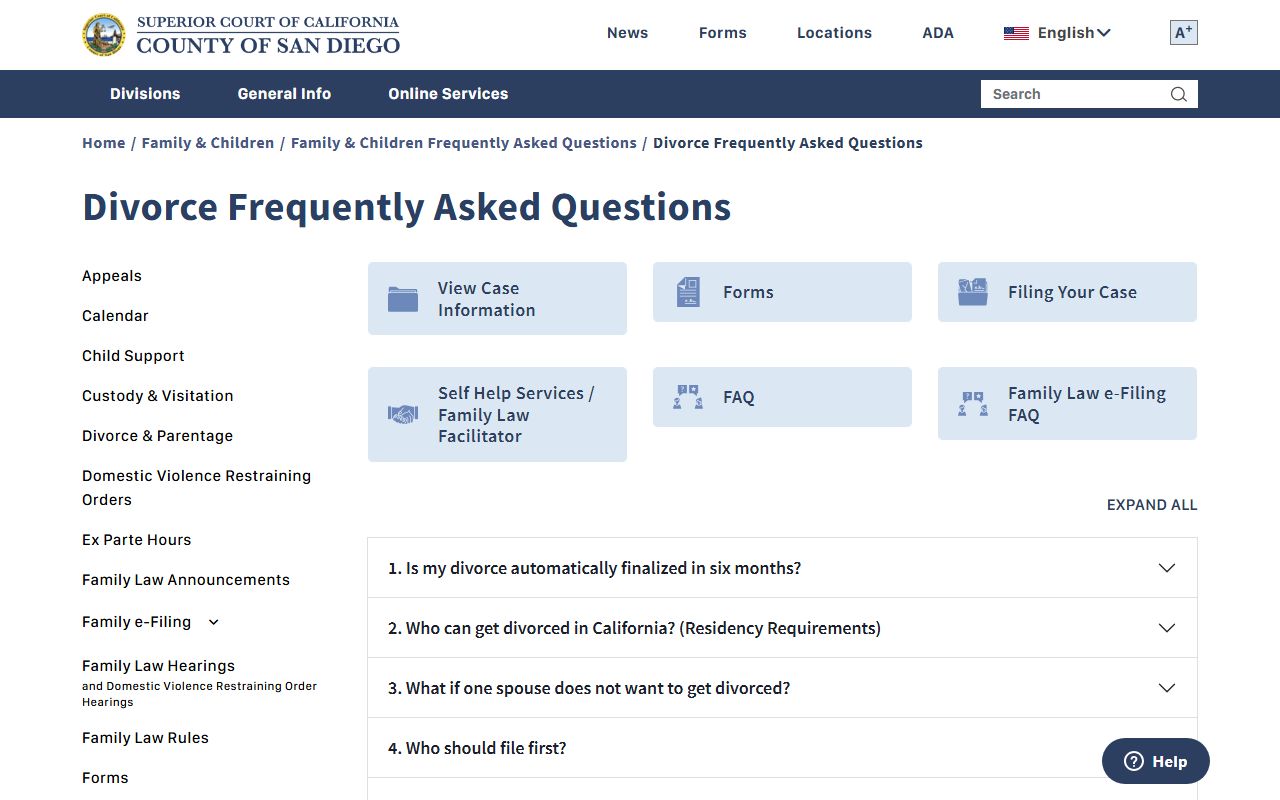
San Diego Superior Court provides comprehensive family law information at sdcourt.ca.gov. The website has forms, instructions, fee information, and self-help resources. Court staff can direct you to the correct courthouse for your needs.
According to San Diego County Recorder/Clerk, the Recorder-Clerk office does not hold divorce records. All divorce decrees must be obtained from the Superior Court, not the county Recorder-Clerk.
How to Get Divorce Decree Copies
To obtain a copy of your San Diego divorce decree, contact San Diego County Superior Court. Visit the courthouse where your case was filed. Bring photo ID. Provide your case number or both party names and approximate divorce date. Tell the clerk whether you need a certified copy or plain copy.
Fees are set by state law. Certified copies of divorce decrees cost $15 according to court information. This $15 fee covers certification of the decree. If your decree has multiple pages, expect 50 cents per page for copies. Plain copies without certification are 50 cents per page.
For other documents like support orders or settlement agreements, certification costs $40 plus copy fees. The $15 reduced fee applies only to the final divorce decree itself. Always confirm which documents you need before paying.
For in-person requests, pay by cash, check, or credit card. Processing time varies. If your file is readily available, you may get copies same day. If the file is in storage, it takes longer. The clerk informs you when to return or offers to mail copies when ready.
For mail requests, write to the business office at the courthouse where your case was filed. Include full names of both parties, your case number if known, approximate date of divorce, specific documents needed, and your contact information. Enclose payment and a self-addressed stamped envelope with sufficient postage for return mail. Processing generally takes one to several weeks.
Note: Copy fees are generally 50 cents per copy page per court fee schedules.
Online Case Search
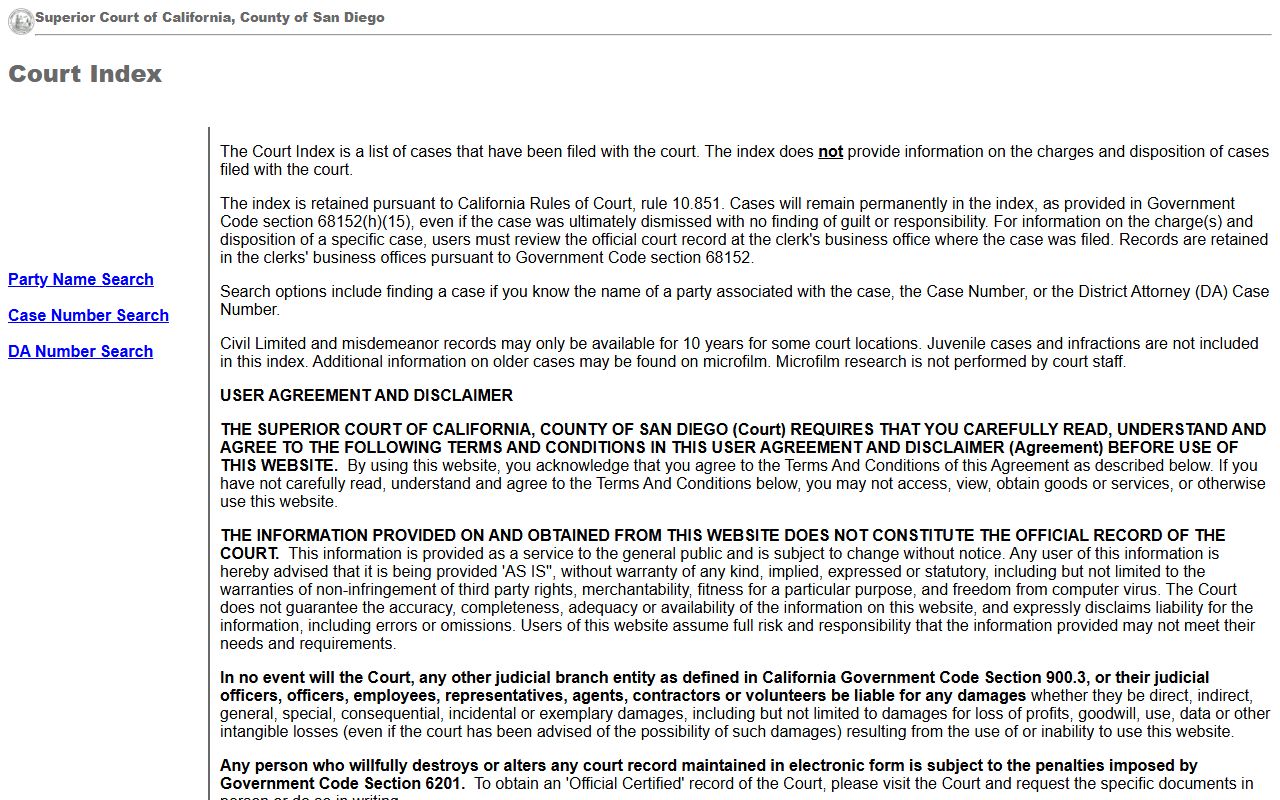
San Diego Superior Court provides online case search at courtindex.sdcourt.ca.gov. You can search for cases by party name or case number. The system shows case information for civil, family law, probate, and small claims cases.
The portal displays case summaries, party names, filing dates, and case status. You can track case progress and see when judgments are entered. The system also provides access to registers of actions showing all filed documents and court dates.
California law restricts remote access to family law documents. Under California Rules of Court Rule 2.503, courts may not provide full public remote access to family law case files including dissolution records. You can see case information online, but actual divorce documents typically require an in-person courthouse visit or formal written request.
If you cannot locate your case online, contact the courthouse for assistance. Court staff can help search using different name variations, filing dates, or other identifying information. There may be a search fee if staff search takes more than 10 minutes.
Legal Resources in San Diego
San Diego County offers several resources for people handling divorce cases. The Superior Court Self-Help Center provides free assistance. Staff help you understand court procedures, fill out forms, and navigate the divorce process. They cannot give legal advice but provide general information.
Legal Aid Society of San Diego offers free legal services to qualified low-income residents. They handle family law matters including divorce. Call (877) 534-2524 to see if you meet income eligibility. Services may include advice, document preparation, and court representation in some cases.
San Diego County Bar Association operates a lawyer referral service. Call (619) 231-8585 to connect with family law attorneys practicing in San Diego. Initial consultations typically have set fees. The service matches you with attorneys experienced in divorce cases.
Family Law Facilitator offices at each courthouse provide free help with child support and some other family law issues. Ask at your local courthouse about facilitator services and hours. These services help people who are representing themselves.
San Diego City Hall does not handle court records. City offices cannot provide divorce decrees or court documents. All divorce records are maintained by San Diego County Superior Court. Always contact the court, not city government, for divorce records.
California Divorce Law Overview
California uses no-fault divorce. You do not need to prove wrongdoing by either spouse. The only legal grounds are irreconcilable differences or permanent legal incapacity. Most divorces are filed based on irreconcilable differences. This applies to all California divorces including those filed in San Diego.
California requires a mandatory six-month waiting period. Under California Family Code Section 2339, no divorce judgment is final until six months after the respondent is served with the petition. Even if both parties agree on all terms, the six-month waiting period applies. The court cannot finalize the divorce earlier than six months.
Residency requirements must be met before filing. One spouse must have lived in California for six months and in San Diego County for three months before filing the divorce petition. If you recently moved to San Diego, you may need to wait to establish the required residency. The court verifies residency when the petition is filed.
The court clerk maintains all divorce records according to California Family Code Section 2338. When the judgment is entered, the clerk sends notice to both parties or their attorneys. This ensures everyone is informed when the divorce becomes final. The clerk also keeps files available for future copy requests and court proceedings.
Court clerks report divorce judgments to the State Registrar monthly under California Health and Safety Code Section 103200. The state tracks divorces for vital statistics purposes. However, actual divorce decrees are only available from the Superior Court, not from state vital records offices.
Nearby Cities
San Diego is near several other cities over 100,000 population. Chula Vista is directly south with about 275,000 residents. Both cities use San Diego County Superior Court for divorce cases. The South County Regional Center in Chula Vista serves both communities.
Oceanside is north along the coast with about 178,000 residents. El Cajon is east with 105,000 residents. All San Diego County cities file divorce cases with the same Superior Court system, though different regional centers serve different geographic areas.
For complete information about San Diego County divorce records, visit the San Diego County page. That page has comprehensive details about all courthouse locations, online services, fees, and procedures for the entire county including San Diego.