
Calaveras County Divorce Decree Access
Calaveras County divorce decree records are kept at the Superior Court in San Andreas. The courthouse is at 400 Government Center Drive, San Andreas, CA 95249. All family law cases in Calaveras County are filed and maintained at this location. The court handles divorce, legal separation, and nullity matters for county residents. To get a copy of your divorce decree, contact the clerk's office by phone or in person. You can also submit a written request by mail. Certified family law judgments cost $15 according to state fee rules. Plain copies are 50 cents per page. Call (209) 754-9800 to reach the court and ask about records. Staff can tell you what information you need to provide and how long processing takes.
Calaveras County Quick Facts
Court Location and Contact
Calaveras County Superior Court is in San Andreas, the county seat. The address is 400 Government Center Drive, San Andreas, CA 95249. This is the only courthouse in Calaveras County. All family law matters are handled here. The main phone number is (209) 754-9800. Call to speak with clerk's office staff about divorce records.
Court hours are generally Monday through Friday from 8:00 AM to 4:00 PM. These hours can change on holidays or due to court schedules. Call ahead to confirm the office is open before making the trip. San Andreas is a small town in the Sierra Nevada foothills. If you are traveling from out of the area, plan for mountain roads and check weather conditions in winter.
When you contact the court, be ready to provide information about your case. Have the full names of both parties and the approximate date of your divorce. A case number speeds up the search process. If you do not have a case number, staff will search by name and date. This may take longer and could incur a search fee if it exceeds 10 minutes.
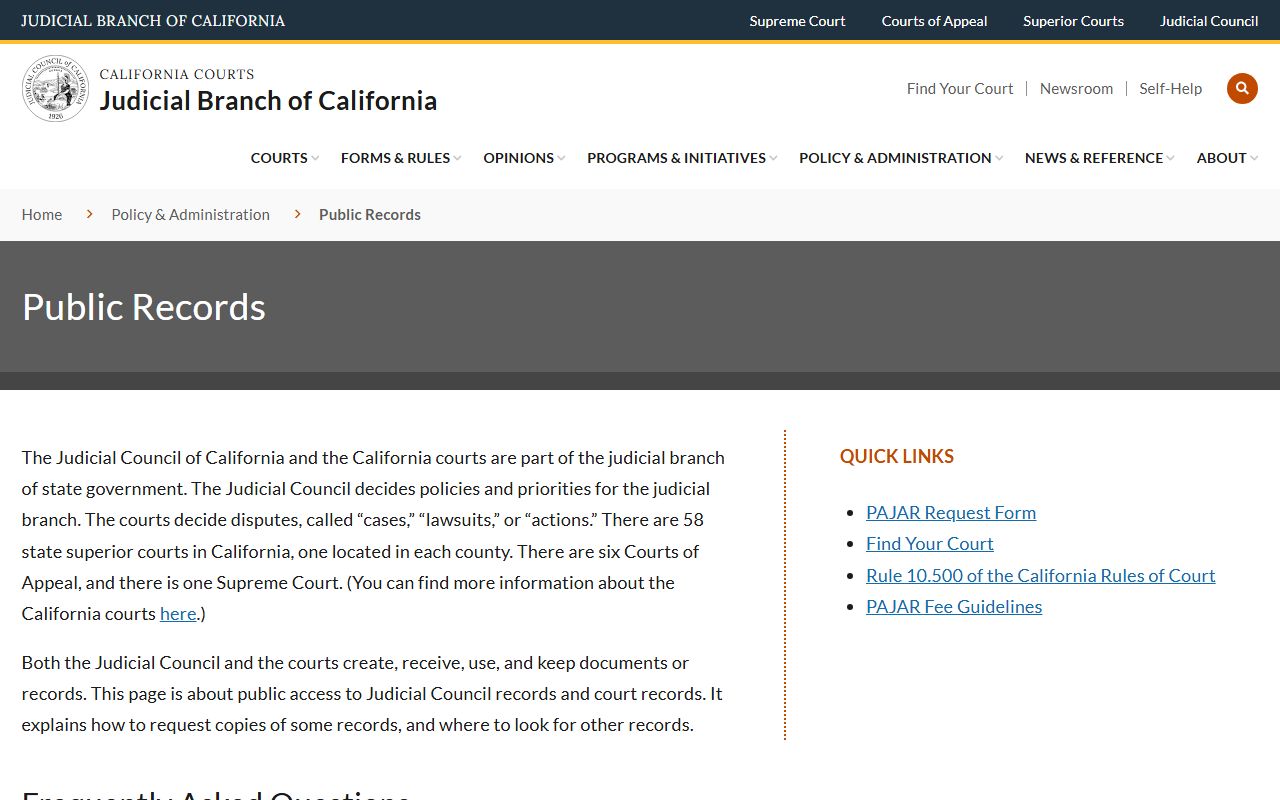
For general information about California court records, visit courts.ca.gov. This page explains your rights to access court records and how to request copies from any Superior Court in the state.
Getting Copies of Divorce Decrees
To request a copy of your Calaveras County divorce decree, start by gathering the information you need. Write down the full legal names of both parties as they appear on the divorce papers. Note the date the divorce was finalized if you remember it. If you have the case number, bring that too. The case number makes the search much faster and helps avoid search fees.
Decide whether you need a certified copy or a plain copy. Certified copies have an official court seal. They are required for legal purposes like changing your name on a driver's license, passport, or Social Security card. Certified copies are also needed if you plan to remarry. Plain copies do not have a seal. They work fine for personal records but may not be accepted by government agencies.
You can request records in person by visiting the courthouse. Bring photo identification and payment. The clerk's office will locate your case file and make copies. Depending on the court's workload, you may get your copies the same day or need to return later to pick them up. Ask staff when your copies will be ready.
For mail requests, write a letter to the court stating what documents you need. Include all case details, your contact information, and a return address. Enclose a check or money order for payment. Add a self-addressed stamped envelope with enough postage for the court to mail your copies back. Processing time for mail requests varies. Most requests are handled within a few weeks, but it can take longer if the court is busy or your file is in storage.
Fees for Divorce Records
Calaveras County follows California state law for court fees. Certified copies of family law judgments cost $15. This fee is set by California Government Code Section 70674. The $15 includes the certification and one page. If your decree has multiple pages, each extra page costs 50 cents.
Plain copies without certification are 50 cents per page. There is no base fee for plain copies, just the per-page charge. If you need other documents from your case file, such as custody orders or property settlements, those cost $40 to certify plus 50 cents per page for copies. Make sure you specify exactly which documents you need so you get an accurate cost estimate.
If the court must search for your case by name and date, and the search takes more than 10 minutes, there is a $15 search fee. This is separate from copy and certification fees. Providing your case number eliminates the search fee. If you do not have the case number, try to give as much detail as possible about when and where the divorce was filed to help staff find your case quickly.
Payment should be by check or money order made payable to Calaveras Superior Court. Cash may be accepted for in-person requests, but call to verify first. Do not mail cash. Write your case number on the check if you know it. This helps staff match your payment to the correct file. Keep a copy of your request and payment receipt for your records.
Record Access and Privacy
Divorce records in California contain sensitive personal information. Not all parts of a divorce file are available to the public. Financial documents, child custody evaluations, and sealed orders may be restricted. If you are a party to the divorce, you have more access to your own case file than someone who is not involved in the case.
When you request records, the court reviews what can be released based on California law and court rules. Some information may be redacted or withheld to protect privacy. If you believe certain documents should not be made public, you can file an objection with the court. Talk to a family law attorney if you have concerns about confidential information in your file.
California Rules of Court prohibit remote electronic access to family law records. This means you cannot view divorce decrees online from home. You must visit the courthouse to see the actual documents or submit a records request to get copies by mail. This rule applies throughout California and is designed to protect privacy in sensitive family law cases.
For more information about how California courts handle public records, see California Rules of Court Rule 2.503. This rule explains which court records can be accessed remotely and which must be viewed in person at the courthouse.
Legal Help and Resources
Calaveras County is a small, rural county with limited local legal services. For help with family law matters, you may need to contact organizations in nearby counties. Amador County and Tuolumne County have legal aid offices that sometimes serve Calaveras County residents. Call to ask if they can help with your situation.
The California Courts website offers free self-help information at selfhelp.courts.ca.gov. You can find forms, instructions, and videos about divorce, custody, and other family law topics. This is a good resource if you are representing yourself in court and need to understand procedures and requirements.
For private attorney referrals, contact the State Bar of California or check with local bar associations in nearby counties. Some attorneys in Stockton, Modesto, or Sacramento may serve clients in Calaveras County. Ask about fees, travel costs, and whether the attorney can appear at the San Andreas courthouse if needed.
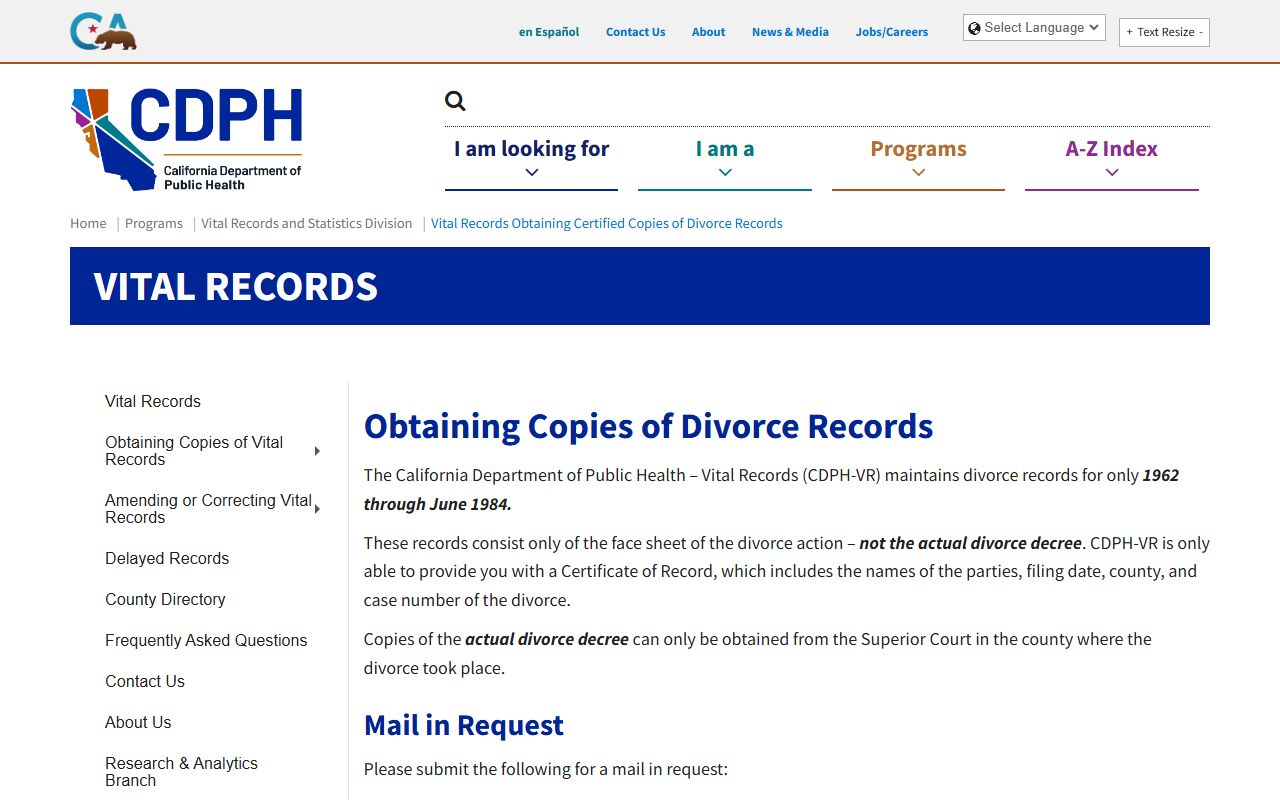
The California Department of Public Health at cdph.ca.gov has limited records for divorces from 1962 through June 1984. CDPH does not have actual divorce decrees. They only provide a certificate of record with basic information. For the full divorce decree, you must contact Calaveras County Superior Court.
Older and Archived Records
Calaveras County has historical court records dating back to the Gold Rush era. Very old divorce records may be stored at a separate archive or in special storage at the courthouse. If you need records from many decades ago, contact the clerk's office to ask about availability. Some older files may be incomplete due to changes in record-keeping practices over time.
Documents can be lost or damaged over the years, especially in older courthouses. If you are researching family history or genealogy, the court can tell you what records still exist for your case. There may be a retrieval fee if the file is in long-term storage off-site.
For divorces that occurred between 1962 and June 1984, California maintained a statewide index. The Department of Public Health can provide a certificate of record showing the names of the parties, the county, and the case number. This certificate does not include the full divorce decree or any details about property or custody. To get the actual decree, you must request it from the Superior Court.
Nearby Counties
Calaveras County is located in the Sierra Nevada foothills. It borders several other California counties. Each has its own Superior Court for divorce records. If your divorce was filed in a different county, contact that county's court directly.