
Carlsbad Divorce Decree Records
Divorce decree records for Carlsbad are maintained by San Diego County Superior Court. All family law cases filed in Carlsbad go through the county court system. Most Carlsbad residents file at the North County Regional Center in Vista. The court keeps all divorce case files including petitions, responses, financial disclosures, and final judgments. You can get copies in person, by mail, or through the court's records request system. Certified copies of divorce decrees cost $15. Plain copies are 50 cents per page. The county has four regional courthouse locations serving different areas.
Carlsbad Divorce Records
San Diego County Court Locations
San Diego County has four main courthouse locations. The North County Regional Center in Vista serves Carlsbad and surrounding cities. The address is 325 South Melrose Drive, Vista, CA 92081. The phone number is (760) 201-8600.
The Central Courthouse in downtown San Diego is at 1100 Union Street. This location handles some county-wide functions. The East County Regional Center is in El Cajon at 250 East Main Street. The South County Regional Center is in Chula Vista at 500 3rd Avenue.
For record requests, contact the business office where your case was filed. Most Carlsbad cases were filed at the North County courthouse in Vista. If you are unsure which location has your file, call the main court number at (619) 844-2777.
Getting Copies of Your Decree
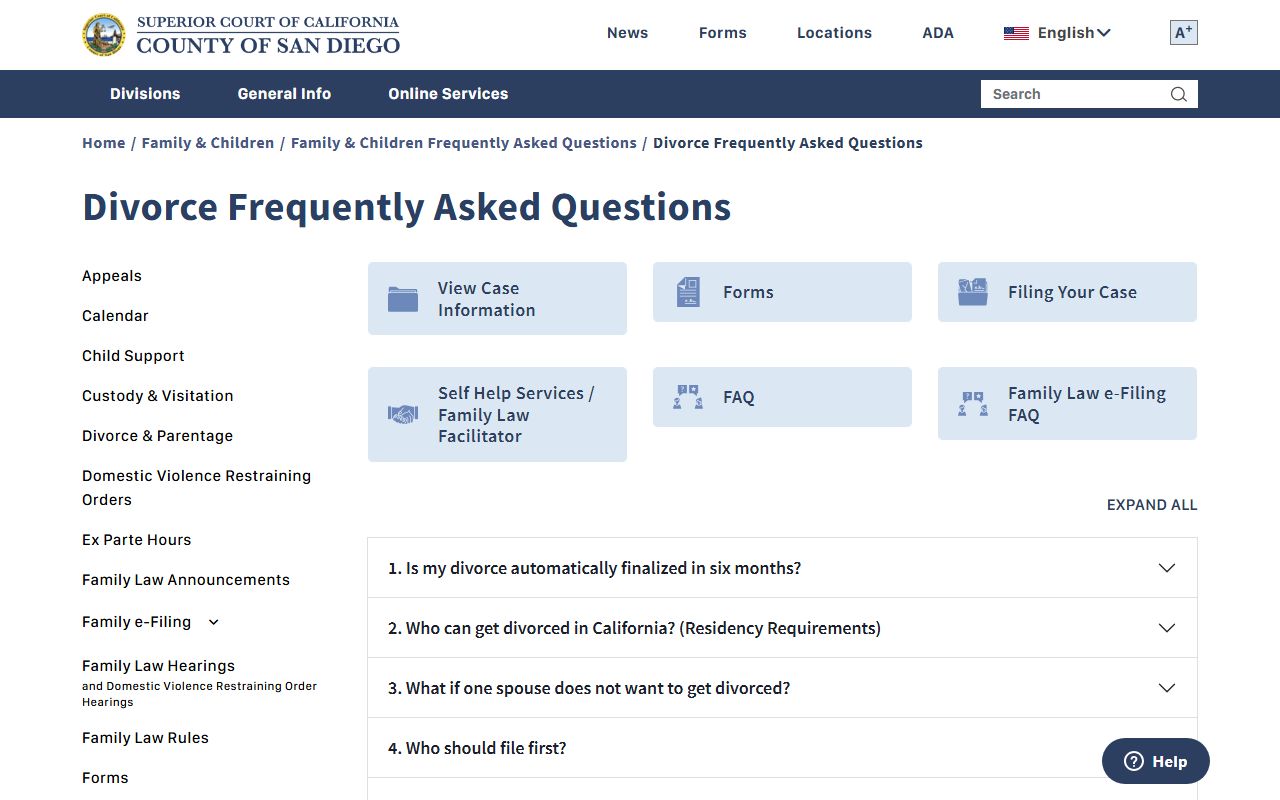
To get a copy of your divorce decree, you can visit the courthouse in person, request by mail, or use the online case search to locate your case information. The court website is sdcourt.ca.gov.
For mail requests, send a letter to the business office where your case was filed. Include the case number, both parties' full names, the specific documents you need, and your payment. Make checks or money orders payable to San Diego Superior Court. Include a self-addressed stamped envelope with sufficient postage.
Copy fees are 50 cents per page. Certified copies of divorce decrees cost $15 total. If you want a certified copy of any other document, that costs $40. The court explains these fees at sdcourt.ca.gov.
Processing times vary. In-person requests are usually filled the same day if the file is on site. Mail requests typically take two to three weeks. During busy periods it may take longer.
Online Case Search
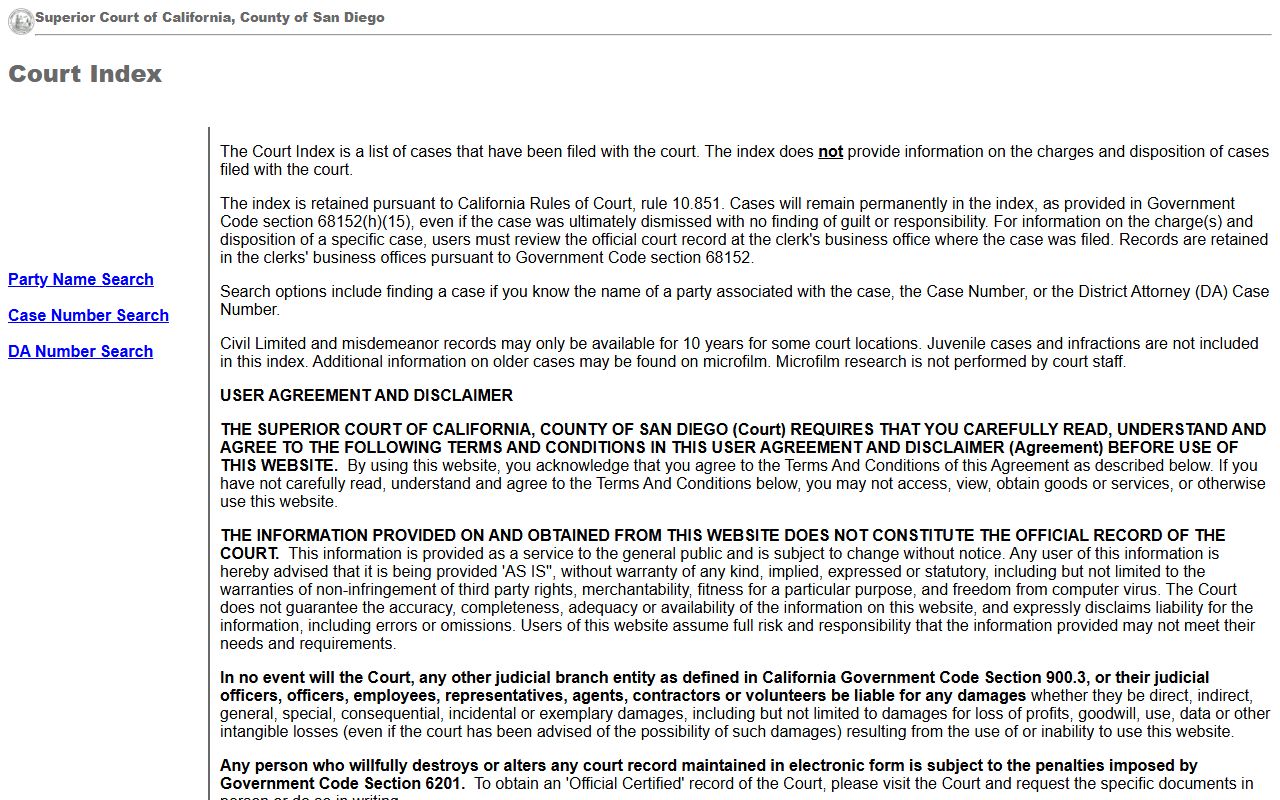
San Diego County provides online case search tools. You can look up cases by name or case number. The system shows case information, hearing dates, and lists of filed documents. This helps you verify your case number and see what is in the file.
California law prohibits viewing the actual divorce documents online. You can see a case summary and register of actions. To view or get copies of the full documents, you must visit the courthouse or submit a mail request.
The online portal is free to search. You only pay fees when you request physical copies or certified documents. Use the online search to gather information before making a records request.
Record Fees and Costs
California law sets standard fees for court records statewide. The $15 fee for certified divorce decrees is established by Government Code Section 70674. This lower fee applies specifically to marriage dissolution records.
Certifying other court documents costs $40 under Government Code Section 70626. This higher fee applies to orders, stipulations, and other documents that are not the final judgment of dissolution.
All copy fees are 50 cents per page regardless of document type. The court charges this for each one-sided page. Two-sided pages count as two pages.
There is no separate search fee in San Diego County for family law records if you provide the case number. If you do not have the case number, staff can help you locate it using party names.
Legal Resources
San Diego Superior Court offers free self-help services for family law matters. The Family Law Facilitator office can answer questions about divorce procedures and help with forms. They cannot give legal advice but can provide general information about court processes.
Legal Aid Society of San Diego provides free legal help to low-income residents. They assist with divorce, custody, support, and domestic violence cases. Eligibility is based on income and case type. Contact their office for an intake screening.
The San Diego County Bar Association operates a lawyer referral service. You can find family law attorneys who practice in North County. Many offer free or reduced-fee initial consultations through the referral program.
Why You Need a Certified Decree
A certified divorce decree proves your marriage legally ended. You need it to remarry anywhere in the United States. County clerks will not issue a marriage license without proof your prior marriage ended.
Government agencies use the decree to process name changes. If you changed your name through the divorce, the decree serves as legal proof. You can use it to update your driver license, Social Security card, and passport. The decree must specifically state the name change for this to work.
Financial institutions may request a copy. Banks use it to update account ownership and marital status. Insurance companies need it to change beneficiaries or remove a former spouse from policies. Retirement accounts use it to verify eligibility for survivor benefits.
Order multiple certified copies at once. Get three to five copies when you make your initial request. Each costs $15, and having extras is convenient. You can submit copies to multiple agencies at the same time instead of waiting to get one copy back before sending it elsewhere.
Privacy and Access Rules
California restricts public access to family law records. California Rules of Court Rule 2.503 prohibits remote electronic access to divorce documents. Courts can show case indexes and summaries online. The actual filed documents must be viewed at the courthouse.
Some information in divorce files is confidential. Financial declarations may be sealed. Child custody evaluations are not public. Domestic violence cases may have additional privacy protections. Only the parties and their attorneys can access sealed portions of files.
If you have safety concerns, you can request address confidentiality. The court can keep your address out of public records. Ask about the Safe at Home program if you need this protection.
Historical Records
San Diego County maintains divorce records from many decades past. Older files may be in archive storage. The court can retrieve them, but it takes extra time. If your divorce was before 1980, allow additional processing time for records requests.
The California Department of Public Health kept certificates of record for divorces from 1962 to June 1984. These are not full divorce decrees. They show only names, date, county, and case number. The actual decree comes from the county court.
For divorces before 1962, the county court is the only source. Contact San Diego Superior Court with as much information as possible. Full names, approximate date, and any other details help staff search historical records.
Nearby North County Cities
Other North San Diego County cities include Oceanside, Vista, and Escondido. All use the same San Diego County Superior Court system. The North County Regional Center in Vista handles records for this entire region.
Larger cities in the county like San Diego and Chula Vista also use San Diego County courts. The same fees and procedures apply throughout the county regardless of which city you live in.