
Alameda County Divorce Records
Divorce decree records in Alameda County are kept by the Superior Court. The court manages files for all family law cases filed in the county. To get a copy of your divorce decree, you need to contact the courthouse. The main records office is at 2233 Shoreline Drive in Alameda. This location handles requests for certified copies and plain copies of divorce records. You can ask for copies in person, by mail, or through written request. Certified divorce decrees cost $15 plus 50 cents per page. The court has records going back many years. If your case file is stored off-site, there is a $10 retrieval fee. Court staff can help you find your case and get the documents you need.
Alameda County Quick Facts
Court Contact Information
The Alameda County Superior Court Records Division is at 2233 Shoreline Drive, Alameda, CA 94501. Call (510) 891-6005 to speak with records staff. The office is open Monday through Friday from 8:30 AM to 3:00 PM. These hours may change on court holidays, so call ahead if you plan to visit.
When you call or visit, have your case number ready. If you do not know your case number, you need to provide the full names of both parties and an approximate date when the divorce was filed or finalized. This information helps court staff locate your case file. Without a case number, the court charges a $15 search fee if the search takes more than 10 minutes.
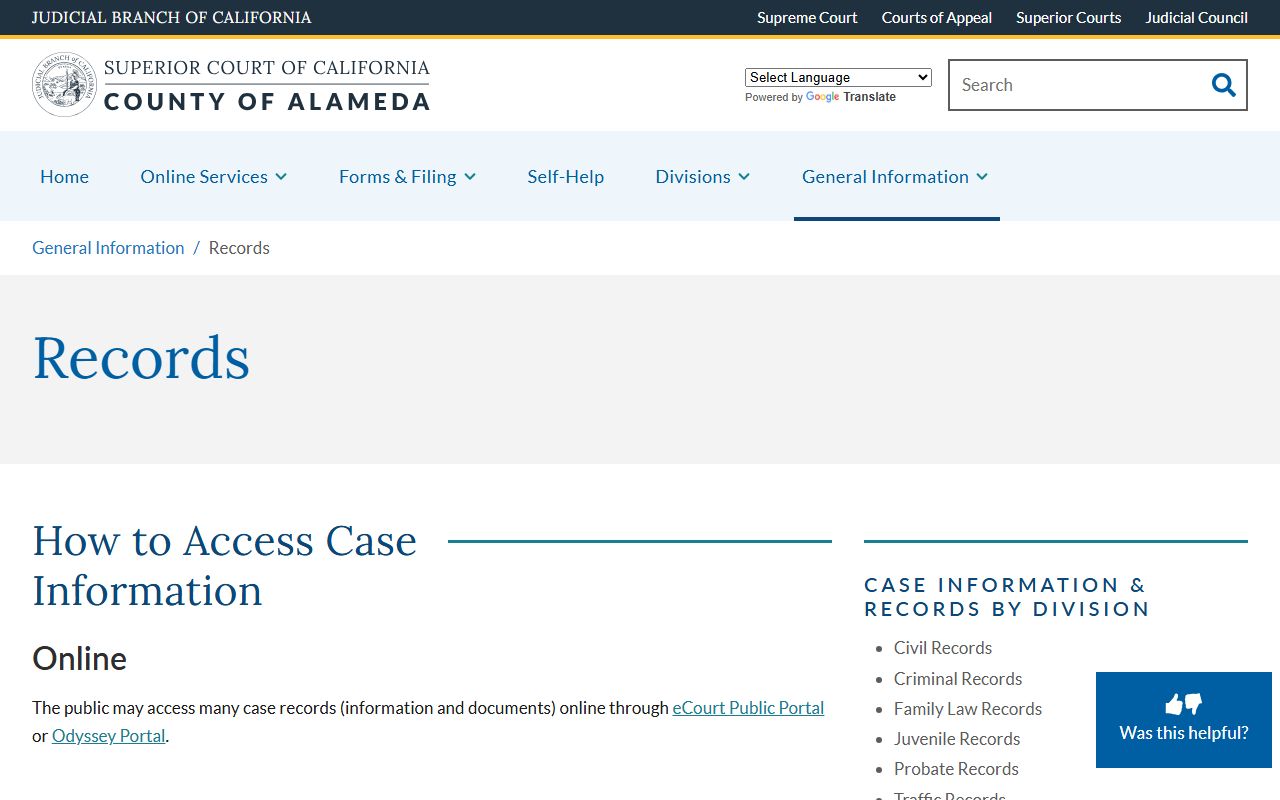
For detailed information about records and copies, visit alameda.courts.ca.gov. The court website lists all the forms you need to request records. You can also find instructions for how to submit requests by mail or in person. The website explains what identification you need and how long processing takes.
How to Request Copies
Alameda County provides a Civil Records Request Form for all record copy requests. Fill out this form completely before submitting it to the court. The form asks for party names, case number, date of filing, and what type of documents you want. Be specific about which papers you need from your case file.
If you want a certified copy of your divorce decree, mark that on the form. Certified copies have an official court seal. They are needed for legal purposes like changing your name or getting remarried. Plain copies do not have a seal and cost less. They are fine for personal records but may not be accepted by government agencies.
Mail your completed form to the records office at the address listed above. Include payment with your request. The court accepts checks or money orders made payable to Alameda Superior Court. Do not send cash by mail. Also include a self-addressed stamped envelope so the court can mail your copies back to you.
Processing time depends on the court's workload. Most requests are completed within a few weeks. If your file is stored off-site, it takes longer because staff must retrieve it first. Urgent requests may be handled faster if you visit in person and explain your need to court staff.
Fees and Payment
Alameda County follows California state law for court fees. A certified divorce decree costs $15 plus 50 cents per page. This fee is set by California Government Code Section 70674. The $15 includes the certification and one page. Each extra page adds 50 cents.
For other court documents like orders or agreements, certification costs $40 plus copy fees. Plain copies are just 50 cents per page with no certification charge. If you do not provide a case number, the search fee is $15. This applies when staff must spend over 10 minutes looking for your case.
The $10 file retrieval fee applies if your case is in off-site storage. Older cases are often stored at a separate facility to save space at the courthouse. Court staff must request the file from storage, which adds time and cost to your request. Ask about this fee when you submit your request so you know the total amount to pay.
Make checks or money orders payable to Alameda Superior Court. Write your case number on the payment if you know it. Keep a copy of your payment and request form for your records. The court does not provide refunds once processing begins, even if the documents are not what you expected.
Online Access
Alameda County has an online portal for case information. The portal lets you search for cases by party name or case number. You can see basic information like when the case was filed and what documents are on file. However, you cannot view the actual divorce decree or other sensitive family law documents online.
California Rules of Court restrict remote access to family law records. This means you can look up case information from home, but you must go to the courthouse to see the full file. The online system shows register of actions, which is a list of what happened in the case. It does not show the papers themselves.
To get copies of documents, you still need to submit a records request. The online portal is helpful for finding your case number and checking what documents exist. Once you have that information, follow the regular process to order copies. The court does not offer online document ordering for divorce records at this time.
Privacy and Access Rules
Divorce records in California are not fully public. Some parts of the case file may be sealed or confidential. Financial information, child custody details, and personal addresses are often restricted. When you request copies, the court reviews what can be released.
If you are a party to the divorce, you have more access rights than the general public. You can get copies of most documents from your own case. People who are not parties may only see certain parts of the file. The court clerk decides what documents are available based on California law and court rules.
Per California Rules of Court Rule 2.503, family law records must not be available for remote electronic access. This rule protects privacy in sensitive cases. Courts can only show these records on computers at the courthouse, not over the internet to the general public.
If someone else is requesting your divorce records without your permission, the court may notify you. You can object to the release of certain documents if you believe they should remain confidential. Talk to the court clerk or a family law attorney if you have concerns about who can access your divorce file.
Legal Assistance
Several organizations in Alameda County provide help with family law matters. The Superior Court Self-Help Center offers free assistance to people representing themselves. Staff can help you understand court forms and procedures. They cannot give legal advice, but they can explain what documents you need for your situation.
Legal Aid Society of Alameda County offers free legal services to low-income residents. They handle family law cases including divorce. Call to see if you qualify for their help. They have offices in Oakland and other locations throughout the county.
The Alameda County Bar Association runs a referral service. They can connect you with a private family law attorney. Fees vary by attorney. Some offer free or low-cost initial consultations. Ask about payment plans if you cannot afford the full cost upfront.
Cities in Alameda County
Alameda County includes several cities with population over 100,000. Residents of these cities file for divorce at Alameda County Superior Court. Select a city below for local information.
Nearby Counties
Alameda County borders several other California counties. Each has its own Superior Court system for divorce records.